
In commercial buildings, an automatic water shut off valve is often positioned as the ultimate safeguard against water damage. It’s easy to understand why. Water damage remains one of the most frequent and costly non-weather-related insurance claims, and property teams are constantly looking for ways to reduce that risk.
As smart building technology becomes more accessible, the conversation almost always starts the same way: can the system automatically shut off the water?
On the surface, it sounds like a perfect solution. A leak is detected, a valve closes, and the issue is contained. But in large-scale commercial, industrial, and multi-family environments, the reality is more complex. While an automatic water shut off valve has clear benefits, it is not always the most practical or effective solution on its own.
Understanding where it fits — and where it doesn’t — is key to building a reliable water leak mitigation strategy.
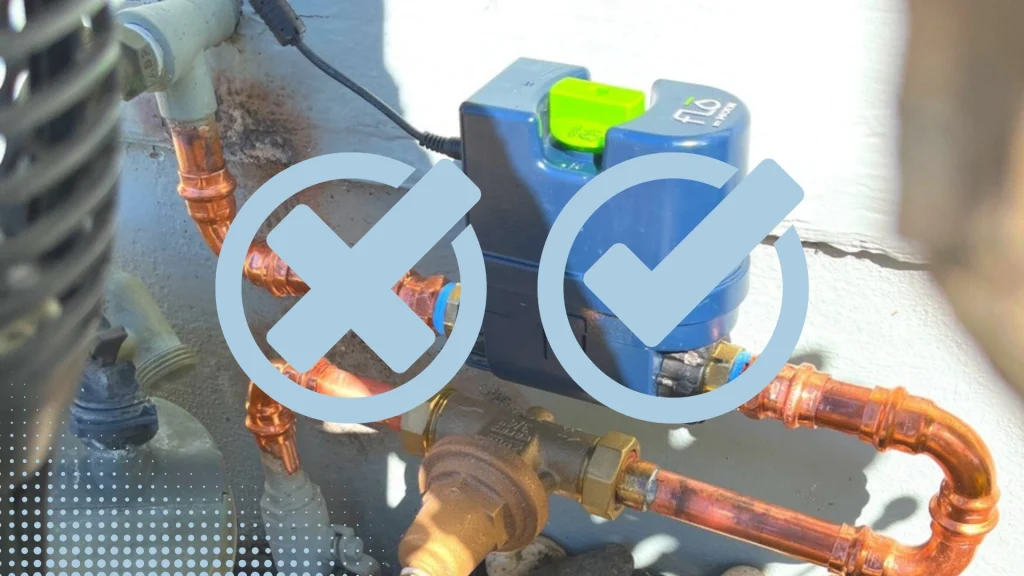
The Hidden Hurdles of an Automatic Water Shut Off Valve
For a single-family home, installing an automatic shut off valve is relatively straightforward. In commercial properties, however, complexity increases quickly. What works in a residential setting does not always translate at scale.
1. The Capital Expenditure Gap
The most immediate barrier to implementing an automatic water shut off valve across a commercial property is cost.
Wireless water leak detection sensors can be installed quickly, often without specialized labor. In contrast, installing a valve requires physical intervention in plumbing infrastructure. This introduces several layers of complexity:
- Permitting and skilled labor to modify existing piping
- Higher hardware costs for commercial-grade motorized valves
- Ongoing maintenance to ensure valves remain functional over time
In a large building, the challenge isn’t installing one valve — it’s determining how many are needed. To effectively mitigate risk, valves may need to be installed across main lines, branch lines, or even individual units.
When multiplied across an entire portfolio, the cost difference becomes significant. In many cases, a property can deploy comprehensive water leak detection coverage throughout a building for the same cost as installing only a limited number of shut off valves.
2. Operational Friction and False Alarms
Beyond cost, there is the day-to-day reality of building operations.
In high-traffic environments such as office towers or multi-family buildings, water usage is constant. Cleaning crews, tenants, and maintenance teams all interact with water throughout the day. This creates a challenge when an automatic water shut off valve is tied directly to sensor triggers.
Consider common scenarios:
- A janitorial team mops near a sensor
- A tenant spills water in a kitchenette
- Routine maintenance introduces temporary moisture
If these events trigger a shut-off, the result could be a loss of water service across a floor or even an entire building.
This is where operational friction becomes a real concern. False positives are not rare in active environments, and when each one leads to a shutdown, the disruption can outweigh the intended benefit.
Resetting systems, responding to tenant complaints, and restoring service all add complexity to what should be a preventative solution.
When an Automatic Water Shut Off Valve Makes Sense
Despite these challenges, an automatic water shut off valve can be highly effective when used in the right context.
The key factor is occupancy.
In buildings or areas that are unoccupied for extended periods, the risk profile changes significantly. In these environments, there is no one available to respond quickly to alerts generated by water leak detection systems.
Examples include:
- Remote warehouses
- Industrial facilities with limited staffing hours
- Buildings that sit vacant overnight or on weekends
In these cases, if a pipe bursts during off-hours, the damage can escalate rapidly. By the time someone arrives on-site, the impact may already be severe.
Here, an automatic water shut off valve provides a critical layer of protection. With proper training on how to reset or override the system, property teams can mitigate the risk of prolonged, undetected leaks.
The Case for Water Leak Detection in Commercial Settings
For most commercial and multi-family buildings, a different approach tends to be more effective: high-density water leak detection paired with rapid response.
Rather than relying solely on automation, this strategy focuses on visibility and speed.
1. Faster Response Without Full Shutdown
In a staffed building, the goal is not necessarily to shut off water automatically, but to respond quickly and precisely.
A well-designed water leak detection system provides:
- Real-time alerts via SMS or email
- Exact location of the issue
- Immediate visibility into developing risks
This allows teams to act before a leak spreads. For example, identifying moisture in a specific unit or mechanical space enables targeted intervention without disrupting the entire building.
2. Catching Small Leaks Before They Escalate
Not all water damage events are dramatic.
In fact, many of the most costly incidents begin as slow, undetected leaks. These can occur behind walls, under appliances, or within mechanical systems.
An automatic water shut off valve is typically designed to respond to high-flow events. It may not activate during a slow drip that gradually causes damage over time.
Water leak detection systems, on the other hand, identify moisture at its earliest stage. This allows property teams to address issues such as:
- Failing seals
- Minor pipe leaks
- Equipment wear and tear
before they develop into major problems.
3. Scalable Coverage Across Entire Buildings
One of the biggest advantages of modern water leak detection is scalability.
Wireless technologies, such as LoRaWAN networks, allow sensors to be deployed across a wide range of environments without relying on existing Wi-Fi infrastructure. This enables coverage in areas that are traditionally difficult to monitor, including:
- Mechanical rooms
- Underground parking garages
- Utility spaces
- Individual tenant units
Because installation is fast and non-invasive, entire buildings can be equipped in a short period of time.
This “coverage-first” approach ensures that risk is monitored comprehensively, rather than selectively.
Balancing Automation and Visibility
The idea of using an automatic water shut off valve as a complete solution is appealing. It offers a sense of control and immediate action.
However, in large commercial environments, the trade-offs must be carefully considered.
High installation costs, ongoing maintenance requirements, and the potential for operational disruption all factor into the decision. At the same time, relying solely on water leak detection without a response strategy can leave gaps.
The most effective approach is often a balanced one.
Use an automatic water shut off valve where it provides clear value — particularly in low-occupancy or high-risk scenarios. In parallel, deploy water leak detection systems to provide continuous visibility across the building.
What Property Teams Can Take Away
Water damage is rarely the result of a single failure. It is usually the outcome of a small issue that went unnoticed for too long.
An automatic water shut off valve can be a powerful tool, but it is not a universal solution. In many commercial settings, visibility and rapid response deliver greater value than full automation alone.
By investing in comprehensive water leak detection, property owners and managers gain the insight needed to act early, reduce risk, and maintain operational stability.
In the end, the goal is not just to stop water when something goes wrong.
It is to know about the problem before it becomes one.